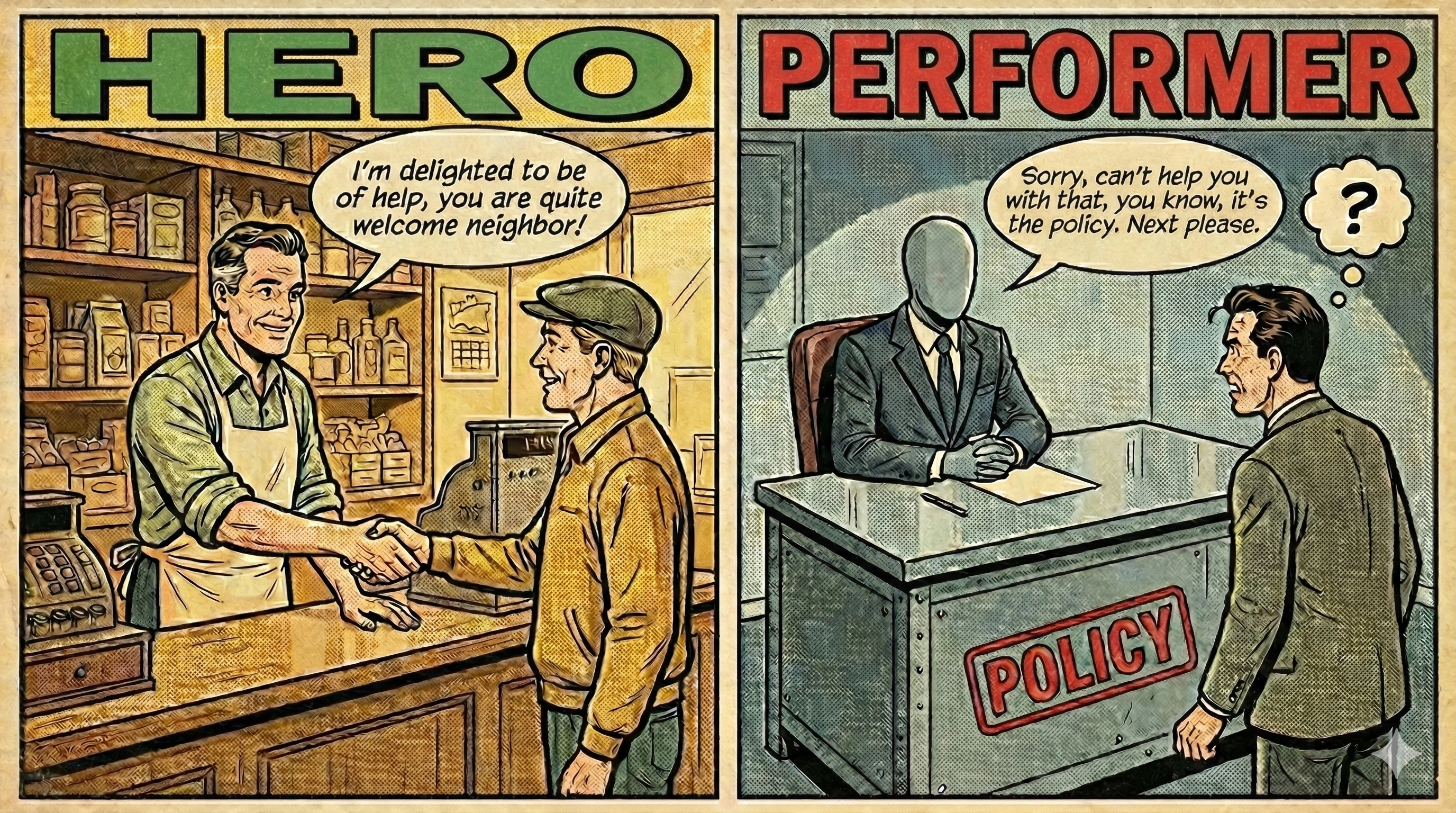
THE ZERO: Andi Owen, MillerKnoll
The story: In April 2023, employees at MillerKnoll—the furniture giant behind Herman Miller chairs—asked their CEO a reasonable question during a town hall: How should we stay motivated if we don't get bonuses this year?
CEO Andi Owen's response went viral. "Don't ask about 'What are we going to do if we don't get a bonus?' Get the damn $26 million," she said. "Spend your time and your effort thinking about the $26 million we need and not thinking about what you're going to do if we don't get a bonus."
Then came the line that would define her leadership: "I had an old boss who said to me one time, 'You can visit Pity City, but you can't live there.' So, people, leave Pity City. Let's get it done."
A clip of Owen's comments was leaked to social media, and it spread widely across platforms. One version of the video posted to Twitter had been viewed more than 7 million times.
What made the backlash especially brutal: Social media users pointed out the tone-deaf nature of Owen's remarks in light of her own personal wealth. According to a proxy statement filed by the company, Owen's salary for the previous fiscal year amounted to nearly $1.1 million while more than $3.5 million in stock awards and other compensation brought her total compensation to $4.98 million.
The median employee income at MillerKnoll was $44,810. Owen earned 111 times what her typical worker made—while telling them to stop worrying about their bonuses.
She later apologized: "I want to be transparent and empathetic, and as I continue to reflect on this instance, I feel terrible that my rallying cry seemed insensitive."
Why it's performer: Owen's mind was filled with one question: "How do I get these people to hit my number?"
Her employees asked how to stay motivated during financial uncertainty. Her answer was: stop feeling your feelings and focus on my metric. The $26 million she referenced wasn't their goal—it was hers. Their concern about bonuses was a distraction from what she needed.
When a leader earning $5 million tells workers earning $45,000 to "leave Pity City," they reveal exactly whose city they've been living in.
THE HERO: Bob Chapman, Barry-Wehmiller
The story: In early 2009, industrial manufacturer Barry-Wehmiller faced the same crisis every company faced during the Great Recession. 40 percent of the company's product orders evaporated in early 2009.
The board asked the obvious question: "I walked into the boardroom and before anything else was said, one of our board members says, 'Don't you need to lay off people?' Because when the economy turns down, you lay off people. That's just what we do. It's a normal accepted behavior."
CEO Bob Chapman refused. He insisted that no one would be laid off.
Instead, every leader in the company took a month off without pay. No one was laid off.
He devised a plan that required all employees—whether they worked on a factory floor or in a corporate office—to take unpaid furloughs of up to four weeks.
Chapman's reasoning was simple: "If we measure success by the way we touch the lives of people, how do we respond?"
The result? Another benefit of handling the pain without layoffs was that Barry-Wehmiller was fully coiled when the economy recovered, and the company enjoyed its fastest growth from 2011 through 2013. It has continued to report double-digit performance gains year after year.
Barry-Wehmiller bounced back quickly after the recession. It set an earnings record in 2010.
Why it's heroic: Chapman's mind was filled with one question: "How do we get through this together?"
When his board said "lay people off," he heard what they were really asking: "Which employees' lives should we destroy to protect our numbers?" He refused the premise.
The furlough plan wasn't just economically smart—it was philosophically consistent. Everyone sacrificed. No one was singled out as disposable. And when recovery came, the company had retained all the talent and institutional knowledge that layoffs would have erased.
THE FRAMEWORK
| Aspect | Performer (Owen) | Hero (Chapman) |
|---|---|---|
| Context | Employees worried about bonuses | 40% revenue collapse |
| Response | "Leave Pity City, get me $26 million" | Everyone takes unpaid furloughs |
| Who sacrificed | Employees (no bonus, plus scolding) | Everyone equally, leaders first |
| Message to team | Stop feeling your feelings | We're in this together |
| Own compensation | $5 million while lecturing | Took same furlough as workers |
| Outcome | Viral humiliation, forced apology | Record earnings by 2010, double-digit growth |
| Mind filled with | Her metrics | Their lives |
THE LESSON
Both leaders faced financial pressure. Both had to address employees' concerns about compensation.
Owen's instinct was to reframe the employees' anxiety as a character flaw. If you're worried about money, you're living in "Pity City." The problem isn't the uncertainty—it's your emotional response to it. Get over yourself and hit my target.
Chapman's instinct was to reframe the business crisis as a shared challenge. If we're going to survive this, we do it together. No one gets thrown overboard. Everyone takes a smaller piece of the lifeboat.
The financial math matters here. Owen's $5 million could have funded significant employee bonuses. Chapman's furlough plan actually saved the company money while preserving jobs. But the deeper math is cultural.
When you tell employees their financial fears are self-indulgent while you earn 111 times their salary, you teach them exactly how much they matter. They learn they're a means to your ends.
When you stand with employees through sacrifice—when leaders go first—you teach them they're part of something bigger than a transaction. They learn they matter.
Chapman grew Barry-Wehmiller from $20 million to over $3 billion. The "soft" approach built a $3 billion company. The "tough love" approach built a viral video.
The hero doesn't tell employees to leave Pity City. The hero builds a city worth staying in.