THE ZERO: Daniel Ek, Spotify
The story: In December 2023, Spotify CEO Daniel Ek announced the largest layoffs in company history—1,500 jobs, 17% of the workforce. The announcement came just weeks after Spotify posted a surprise profit.
In his memo, Ek blamed the workers themselves: "We still have too many people dedicated to supporting work and even doing work around the work rather than contributing to opportunities with real impact."
Then came April 2024. Spotify missed its earnings targets. When analysts asked why, Ek blamed operational difficulties linked to staffing for the group missing its earnings target to start the year.
In other words: he blamed the very employees he had just fired for not being there.
CEO Daniel Ek claims that the layoffs posed a "significant challenge" for the company. He expressed surprise at the negative consequences.
"Although there is no question that it was the right strategic decision, it did disrupt our day-to-day operations more than we anticipated."
The math does not lie: Staff costs for those employees carried a long tail, as most workers received roughly five-month severance packages when they were let go in December. At the same time, the footprint left behind by those employees was bigger than Ek and his executives anticipated.
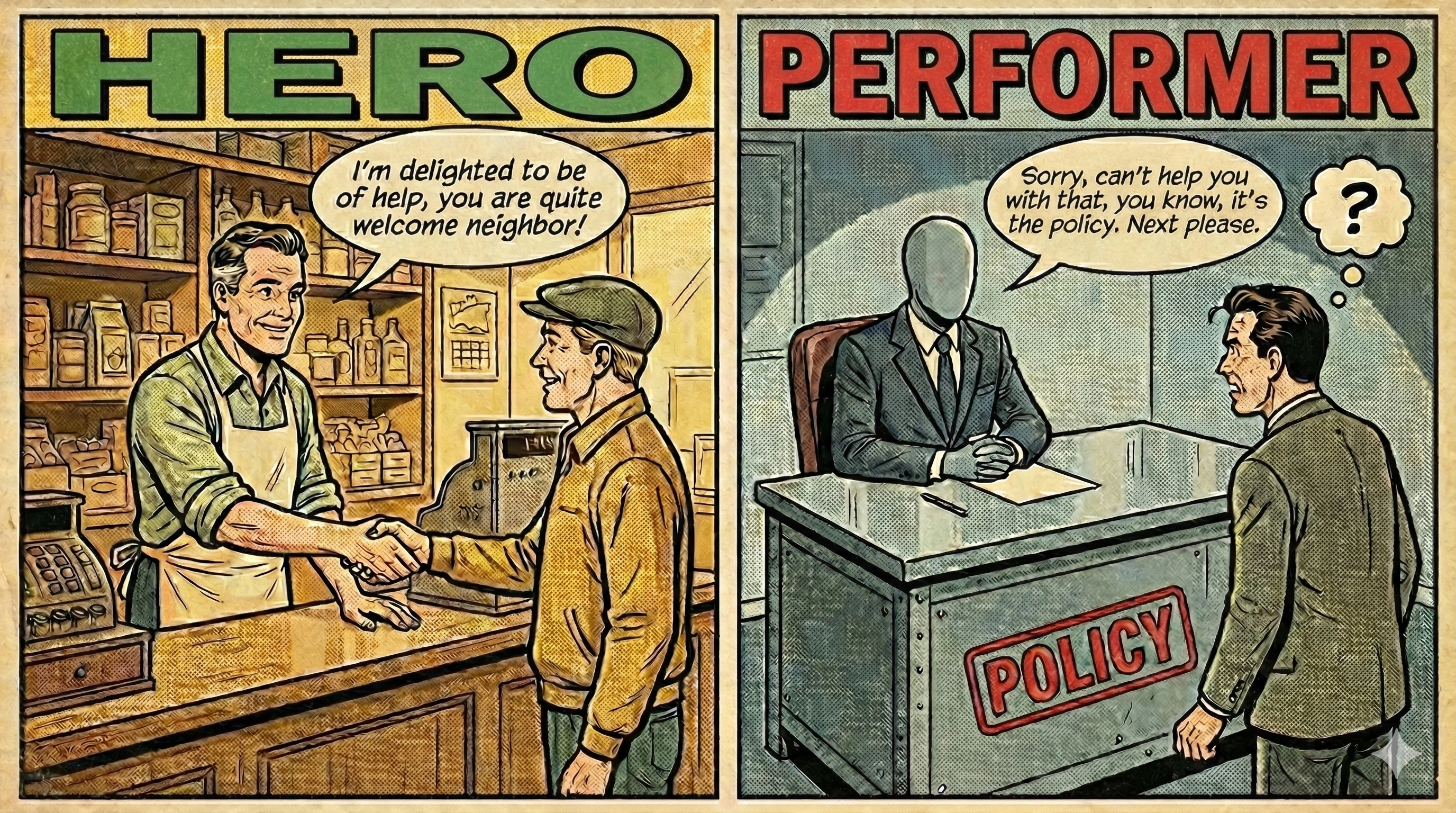
Why it is performer: Ek's mind was filled with one question: "How do I explain this to Wall Street?"
- December: The employees were the problem—"doing work around the work."
- April: The employees were the problem—their absence "disrupted operations."
They were the problem when they were there. They were the problem when they were gone. At no point did Ek's mind fill with the question: "Did I make a mistake?"
What heroic would look like: "We cut too deep. I underestimated how much these people contributed. That is my failure as a leader, and we are learning from it."
THE HERO: Aman Mann, Procurify
The story: When COVID-19 hit in 2020, Vancouver-based Procurify faced the same pressures every tech company faced: revenue uncertainty, frozen budgets, terrified customers. The easy answer was layoffs.
CEO Aman Mann chose a different path.
This CEO cut employee salaries by 20% and implemented a 4-day workweek to avoid layoffs.
"We built Procurify for the worst of times, not the best of times. Our philosophy has always been 'How do you help save jobs, protect your team and your company?'"
Mann did not just cut employees' pay—he walked the talk. The executives took deeper cuts. The message was clear: we are in this together.
The company rebounded, full pay was restored and a shorter workweek became permanent.
The four-day workweek was not a temporary emergency measure. It became a permanent competitive advantage—a signal to current and future employees that this was a company that valued their lives, not just their output.
Why it is heroic: Mann's mind was filled with one question: "How do I protect my people through this?"
He could have laid off 20% of the company. It would have been "the right strategic decision." Wall Street would have approved. LinkedIn commenters would have praised his "tough but necessary" choice.
Instead, he found another way. Everyone sacrificed together. And when the storm passed, everyone benefited together—with their jobs intact and an extra day off every week.
THE FRAMEWORK
| Dimension | Performer (Ek) | Hero (Mann) |
|---|---|---|
| When times got hard | Laid off 17% | Cut pay 20%, kept everyone |
| Who sacrificed | The employees | Everyone, starting with leadership |
| Explanation to team | "You were doing work around the work" | "How do we protect everyone?" |
| When results disappointed | Blamed the fired employees | Took collective responsibility |
| Long-term outcome | Surprise at negative consequences | Permanent 4-day workweek |
| Mind filled with | Wall Street explanations | Protecting his team |
THE LESSON
Both CEOs faced economic pressure. Both had to make hard choices. The difference is not in the difficulty of the situation—it is in where their minds went when the pressure hit.
Ek's mind went to optimization. Employees were "doing work around the work"—a phrase that reduces human beings to efficiency metrics. When the cuts hurt performance, his mind stayed in the same place: the problem was still the employees, now for their absence.
Mann's mind went to his people. "How do you help save jobs, protect your team and your company?" Notice the order: save jobs first, protect team second, company third.
Here is the uncomfortable truth about leadership: the story you tell yourself about your people shapes every decision you make about them.
If you see employees as costs to be optimized, layoffs feel like a "right strategic decision" with surprisingly negative consequences.
If you see employees as people to be protected, layoffs become a last resort—and you will find creative alternatives before you get there.
Ek was surprised that firing 1,500 people hurt the company. Mann was not surprised that keeping his people made them loyal. One saw headcount. One saw humans.
The hero does not ask "How do I explain this to Wall Street?" The hero asks "How do I protect my people through this?"