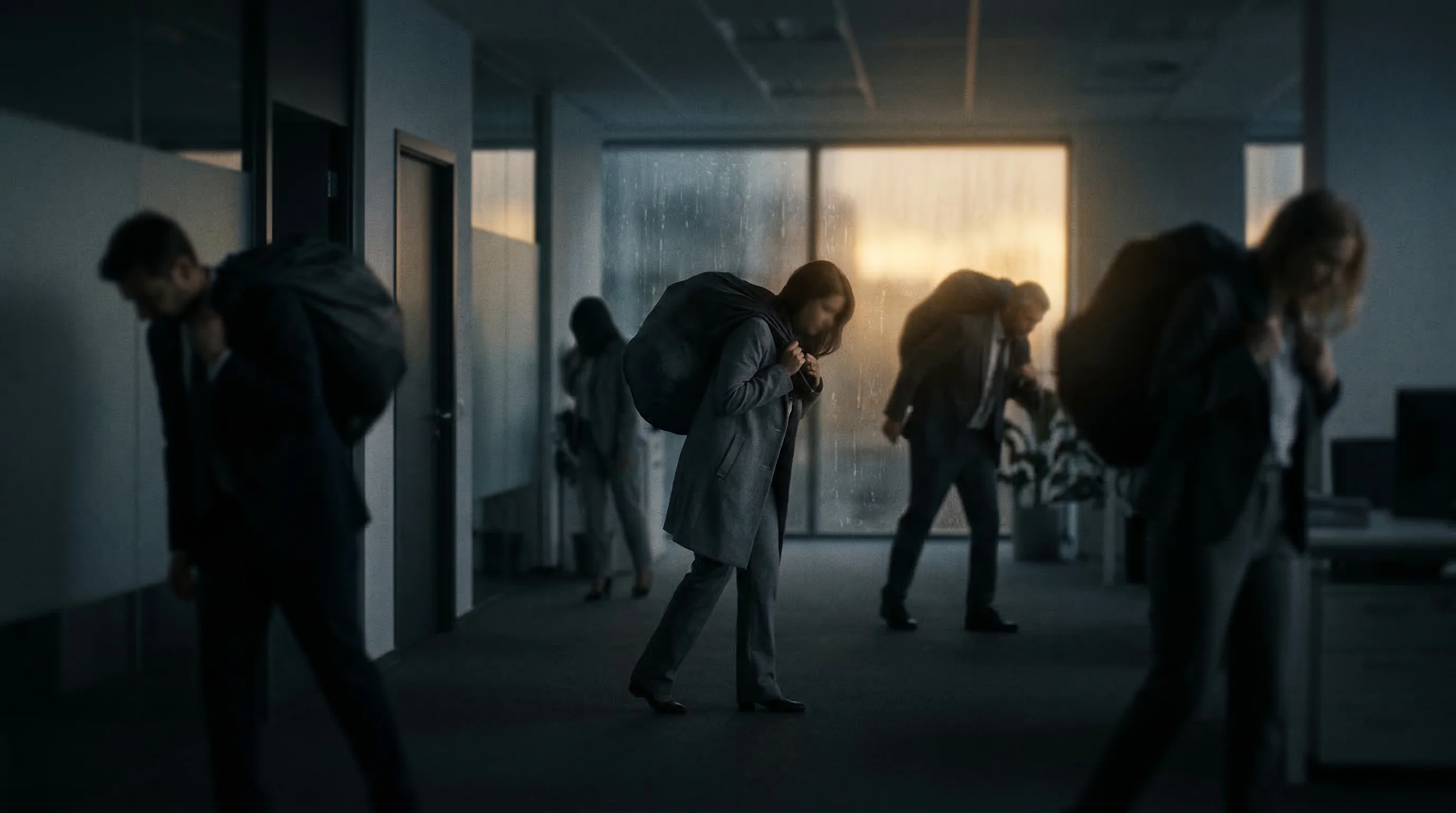
Workplace stress costs the U.S. economy $300 billion per year. That is not the cost of the stress. That is the cost of ignoring what causes it.
What They Found
Meditopia's 2026 workplace stress statistics report compiles data from Gallup, the American Institute of Stress, and the American Journal of Preventive Medicine into a portrait of a workforce under sustained assault. Over 40% of employees report feeling stressed for much of the workday. In the UK, mental health-related absences cost the economy approximately 21.6 billion pounds annually, with 34 million sick days taken each year due to depression, anxiety, and stress. A single burned-out employee costs their employer an average of $4,000 per year in decreased engagement and reduced effectiveness.
The age distribution is revealing. Workers aged 35-44 report the highest frequency of daily stress -- nearly 15% say they feel stressed every single day. These are mid-career professionals, the people organizations rely on for institutional knowledge, team leadership, and operational continuity. They are also the people most likely to be managing both upward and downward, absorbing pressure from leadership while shielding their direct reports.
Regionally, the pattern repeats with local variation. Japan: 31% of employees experience measurable burnout symptoms. Australia ranks among the most overworked OECD countries. Asia-Pacific employees report higher burnout than the global average, driven by long working hours, presenteeism cultures, and hierarchical workplace structures that discourage honest communication about capacity.
What They Missed
The Meditopia report is thorough in cataloging stress and its costs. But its solutions section defaults to the standard toolkit: wellness programs, mental health apps, employee assistance programs, and organizational assessments. These are treatments for a symptom. The symptom is stress. The cause is the consistent, systematic application of pressure from above -- more work, longer hours, less autonomy, higher expectations -- without any corresponding removal of obstacles from below.
The Antidote
Research on the Hero's Journey framework suggests a different physics. The framework calls this dynamic The Vacuum. Most organizations think leadership means pushing people forward -- setting goals, raising the bar, increasing accountability. The Vacuum principle inverts this. Leadership means removing obstacles in front of people instead of pushing from behind.
A 35-year-old middle manager feels stressed every day not because they lack a meditation app. They feel stressed because they are absorbing two directions of pressure simultaneously with no one clearing the path ahead of them. They sit in meetings about strategic priorities. They sit in meetings about operational issues. They sit in meetings about meetings. And then they are expected to do their actual work in the gaps between the meetings, while also answering Slack messages, reviewing others' work, and maintaining the appearance of having everything under control.
The Vacuum says: stop pushing. Start pulling obstacles out of the way. Cancel the meeting that produces no decisions. Kill the report that nobody reads. Stop requiring people to justify their time and start justifying the demands you place on theirs. When you create a vacuum in front of someone -- clear space instead of added pressure -- they move forward naturally. No wellness program required.
What This Looks Like Monday
Look at your team's calendar for next week. Find one recurring meeting that has not produced a decision or action in the last month. Cancel it. Do not replace it with anything. Just give people their time back. That single act removes more stress than any wellness initiative you will ever fund.